
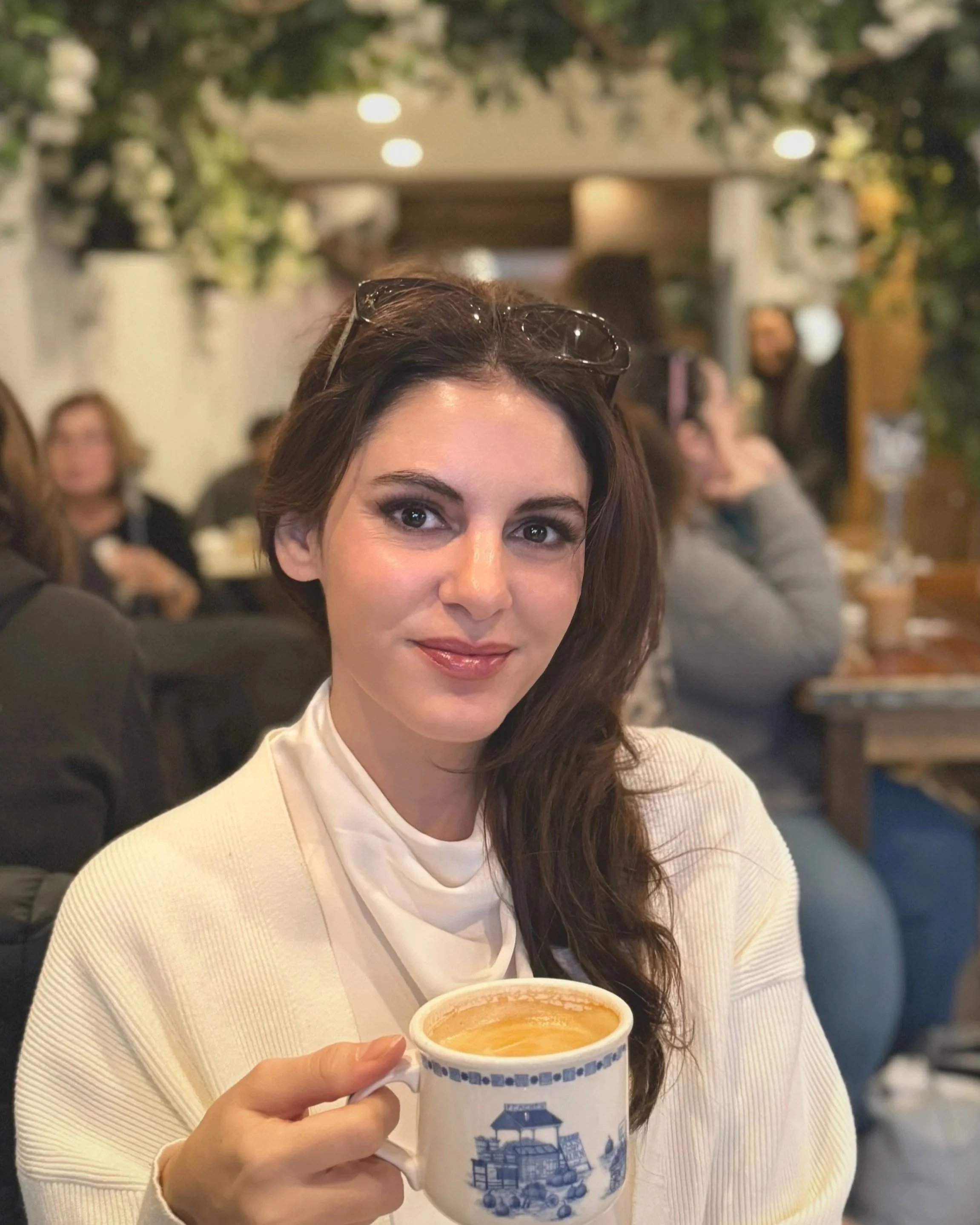
A woman with brown hair and sunglasses on her head holding a coffee mug with a blue illustration, in a busy indoor setting with people in the background.

Hi, I’m Kristina Alfonsi.

I help big ideas cross the bridge from imagination to reality, without losing the magic that made them compelling in the first place.

I still get a little surprised when it works. When a room full of people forget they're standing in a living room. When a child reaches for something that isn't quite there. When strangers solve something together and look at each other after like, did that just happen? That feeling is what I'm designing toward, every time.

My foundation is in feature film animation, formed at Blue Sky Studios under the Disney quality bar on films including Scrat Tales, Nimona, and Spies in Disguise. That's where I learned to feel the difference between making something move and creating the illusion of life. That instinct — the one that knows it when I see it — travels with me into everything I make.

I've followed that feeling across some of the most interesting intersections in interactive experience. At Amazon Alexa Games, I helped design voice-first mixed-reality experiences where anyone could play (no barrier, no controller) and where the win belonged to everyone in the room. What I didn't fully realize at the time was that transforming a living room into a story world through light, sound, and sensory orchestration was spatial experience design, and is the same discipline Imagineering applies to theme parks, just on a different canvas.

At Prime Gaming, I shaped living room multiplayer concepts where an ordinary phone becomes something magical and a game becomes a reason to be fully present, together. At EA Maxis, I built the external development infrastructure for the next generation of The Sims and turned global studios into true creative collaborators for one of the most beloved worlds ever made.

The question underneath all of it is the same: how do you design something that feels like discovery? Where the technology disappears, the world opens up, and what people take with them is something they didn't expect to feel?

I work best in the space where that question lives. Between disciplines, between studios, between what a vision needs to be and what it takes to make it real. I build the systems, relationships, and creative infrastructure that let ambitious things actually ship. And I leave teams more capable than I found them.

That question is now pulling me somewhere new. I'm building an experience design practice rooted in curiosity and the invisible art of guiding without directing. And I'm developing Keiki Mu, a children's museum concept on the North Shore of Kauai, where the natural world becomes the classroom and families learn to stop, look up, and care for the place they're standing in.

It turns out the stop-and-look-up moment is what I've been designing toward all along. I just didn't have a name for it yet.