PRIME GAMING

Social Play Across Devices

Creative Lead, Art Direction & Experience Design | Amazon Prime Gaming

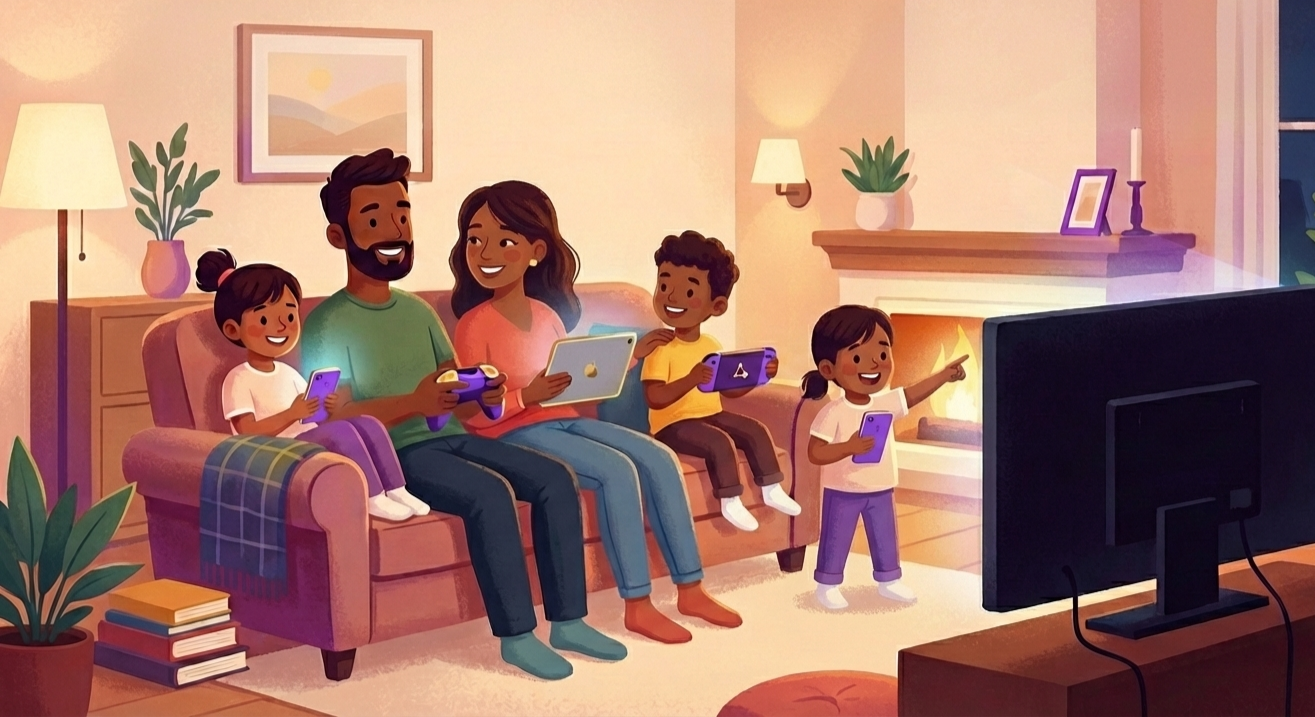
Conceptual pitch image representing low-pressure, shared play in living-room spaces.

Designing how play feels before it even begins

Great experiences don’t ask you to prove yourself. They show you that you belong.

During the early exploratory phase of Prime Gaming’s Luna initiative, I led creative exploration around how casual and family audiences encounter play in a cloud-first world. This work wasn’t about finishing games, it was about designing the feeling of play itself. From the moment someone notices a game, decides to try it, invites others in, and ultimately chooses whether to stay.

We explored experiences that could move naturally between personal devices and shared screens, supporting everything from quick solo moments to relaxed family game nights. The challenge was simple to say and yet hard to solve: make games feel welcoming, low-pressure, and genuinely fun for people who don’t usually think of themselves as gamers.

Key focus areas: Discovery & Onboarding · Social Play Activation · Reimagining IP for Shared Play

The Creative Challenge

This wasn’t a platform built for people who already loved games. It was built for everyone else.

There were no established formats and no clear rules for discovery. The audience included kids, parents, couples, and groups with wildly different comfort levels around play. Many didn’t identify as gamers at all. They were looking for something friendly, social, and low-pressure.

If the first moment felt intimidating or unclear, the experience ended before it began. The real challenge was learning how to invite someone into play before asking anything of them.

Discovery is the First Interaction

In a cloud ecosystem, discovery and gameplay are part of the same experience. How a game appears, how it’s entered, and how it transitions into play determines whether anyone ever plays at all.

My work focused on shaping that first impression, defining how discovery, entry, and early interaction worked together as a single experience. I helped define discovery-to-play flows where someone might notice a game on their phone, move to a shared TV screen, and invite others to join without setup friction or social pressure. Play didn’t begin at launch. It began the moment curiosity was sparked.

Clarity and ease mattered, but so did feel. Buttons needed weight. Transitions needed energy. The experience needed warmth. When those details were right, people leaned in. When they weren’t, they quietly stepped away.

Experience flow illustrating discovery, entry, shared play, and return loops.

Adding “Juice” for Casual Players

One of my core contributions was elevating the moment-to-moment feel of these experiences through deliberate choices around animation, pacing, and feedback.

This included:

  • Expressive animation and feedback that made interactions feel responsive and alive

  • Subtle moments of surprise and delight that rewarded curiosity

  • Seasonal themes and playful transitions that signaled joy rather than obligation

  • Thoughtful pacing that gave players time to look around, laugh, and invite others in

For casual players, these details weren’t decorative. They were deciding factors. Many players chose whether to continue or step away within the first moments, based less on mechanics and more on how the experience felt.

Activating Social Play

A major focus of my work was activation: the moment players understand what an experience is, who it’s for, and whether it feels comfortable to share.

Creative direction emphasized invitation over challenge. Experiences were designed for shared play, with mechanics that encouraged conversation and connection rather than mastery. Success was measured by engagement, not performance.

Within a small R&D pod, my role centered on shaping tone, pacing, and entry experience from early ideation through pitch. I acted as a creative bridge across disciplines and partners, helping ideas evolve quickly without losing clarity or cohesion.

Small choices in animation, transition, and timing helped signal energy and warmth early on, giving players an immediate sense of confidence and momentum before gameplay fully began.

Reimagining IP for Shared Play

Part of my role focused on adapting existing titles and MGM IP for social, cloud-based play. The challenge was to make these games feel welcoming in shared spaces without losing what made them special.

Creative decisions centered on tone, readability, and approachability. Simplified interactions. Expressive animation. Entry moments designed to reduce hesitation and invite play.

In parallel, we explored how Prime Gaming could feel like a coherent experience rather than a loose collection of titles. I helped shape a flexible visual and motion language that could momentarily frame partner games as part of Prime, then gently return players to each game’s native identity. In concepts like Nerdle, this helped signal where players were, without overwriting the brand they came for.

This work required thinking beyond individual games and toward Prime Gaming as a unified experience, with its own visual tone, motion language, and sense of place.

Prototyping, Learning, and Insight

Across early prototypes and concept exploration, one insight surfaced again and again:

Casual players don’t need more options. They need permission to play.

When entry felt friendly and social, players were more willing to try, invite others, and stay engaged. Complexity mattered far less than tone, clarity, and shared context.

These insights informed how we framed pitches, scoped concepts, and evaluated creative direction across the Luna ecosystem.

Impact

This work helped define the early creative direction for social, cloud-based play within Prime Gaming. It shaped how discovery, onboarding, shared play, and portfolio cohesion were approached during Luna exploration, and established principles for designing family-friendly experiences that prioritize feel, connection, and joy.

Why This Work Matters

This work reinforced a core belief in my creative practice: the future of interactive entertainment is about creating experiences people feel comfortable stepping into together. Designing for emotional safety, clarity, and delight continues to guide how I approach creative direction today.

Additional materials and insights available upon request.